· 3-PSI Ltd · Research · 2 min read
Cadaveric Study presented at ECF25
Insights from our cadaveric study on femoral mechanics presented at ECF25.
Introduction
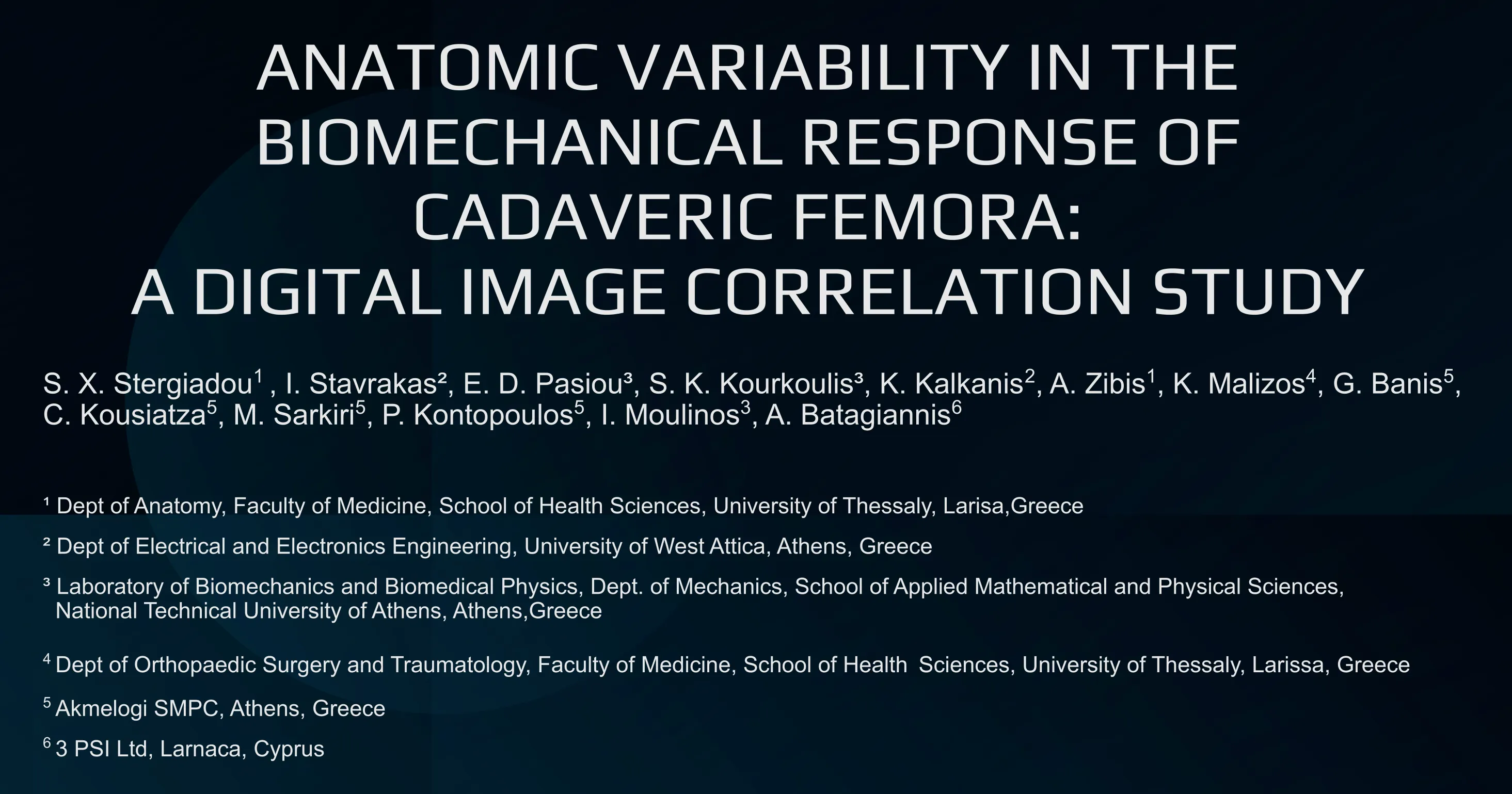
At the 25th European Conference on Fracture (ECF25) in Athens, we presented a comprehensive cadaveric study examining how the geometric properties of the proximal femur govern its mechanical response under physiological loading conditions. This research provides critical insights into patient-specific implant design and fracture risk prediction.
Key Findings
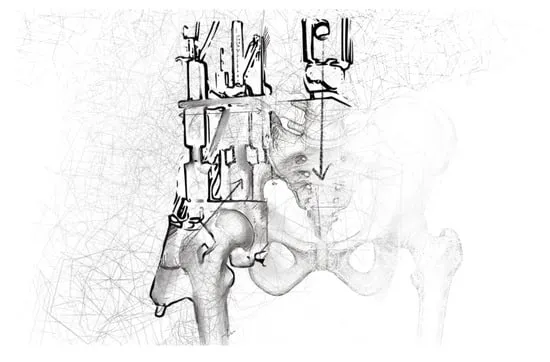
Our study analyzed 14 cadaveric femora using advanced imaging and biomechanical testing methods. We found that femoral geometry is not merely descriptive but directly predictive of mechanical behavior:
- Femoral anteversion showed a strong correlation with anteroposterior displacement (ρ = 0.63, p = 0.017)
- Canal morphology (CFI/MCFI) significantly influenced medial-lateral calcar displacement
- Cortical bone mineral density (CMI) demonstrated the strongest link to axial displacement (r = 0.71, p = 0.004)
- Lateral offset length was associated with lower total displacement and higher stiffness (r = 0.59, p = 0.027)
Methodology
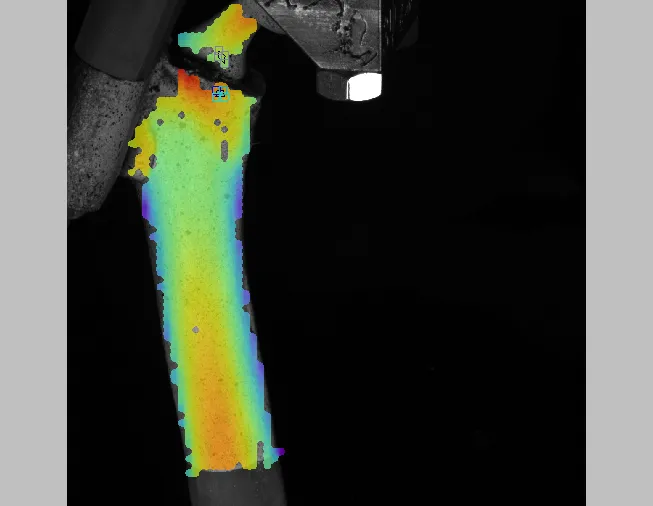
We employed a standardized static loading protocol simulating the stance phase of walking, combined with full-field 3D displacement measurement using Digital Image Correlation (DIC) to capture detailed mechanical responses in the calcar region.
Clinical Implications
These findings have significant implications for orthopedic practice:
- The results support the development of anatomic implants that better match patient-specific anatomy
- Understanding these biomechanical relationships enhances patient-specific surgical planning
- The geometric parameters identified can improve fracture risk assessment and prediction models
This collaborative work involved researchers from the University of Thessaly, National Technical University of Athens, University of West Attica, and AKMELOGI SMPC, demonstrating the value of multidisciplinary research in advancing orthopedic solutions.